

What are the power consumption characteristics of a smart mobile display screen?
Hey there! As a supplier of smart mobile display screens, I've been getting a lot of questions lately about the power consumption characteristics of these nifty devices. So, I thought I'd sit down and share some insights with you all.
First off, let's talk about what makes smart mobile display screens so special. These screens are designed to be portable, versatile, and energy - efficient. They can be used for a variety of purposes, from watching movies on the go to working remotely. But how do they manage to keep their power consumption in check?
One of the key factors that affect power consumption is the screen size. Generally speaking, larger screens tend to consume more power. For example, a 32inch, 4k, Portable Smart Monitor, Touch Screen will use more energy than a smaller 23.8 - inch one. This is because a larger screen has more pixels to illuminate, which requires more power.
Resolution also plays a big role. A 4K display, like the 4K Portable Stand By Me Tv, has a much higher pixel density than a standard HD display. While 4K offers stunning visuals, it comes at the cost of increased power consumption. The higher the number of pixels, the more energy is needed to drive them.
Another important aspect is the type of display technology. There are several types of display technologies used in smart mobile display screens, such as LCD (Liquid Crystal Display) and OLED (Organic Light - Emitting Diode). LCD screens rely on a backlight to illuminate the pixels. The brightness of the backlight can be adjusted, and a higher brightness setting will consume more power. On the other hand, OLED screens are self - emissive, which means each pixel emits its own light. This can lead to better power efficiency, especially when displaying dark content, as pixels can be turned off completely.
The refresh rate is yet another factor. A higher refresh rate means the screen updates more frequently, which can result in smoother motion but also higher power consumption. For most casual users, a standard refresh rate of 60Hz is sufficient. However, gamers or those who watch a lot of high - action content might prefer a higher refresh rate, like 120Hz or even 240Hz, but they need to be aware of the increased energy usage.
Now, let's talk about how we, as a smart mobile display screen supplier, are working to optimize power consumption. We're constantly researching and developing new technologies to make our screens more energy - efficient. For instance, we're using advanced power management chips that can adjust the power supply based on the screen's usage. If the screen is displaying mostly dark content, the power consumption can be significantly reduced.
We're also focusing on improving the backlight technology for LCD screens. Newer backlight designs use less energy while still providing bright and clear visuals. And in the case of OLED screens, we're working on enhancing the lifespan and efficiency of the organic materials.

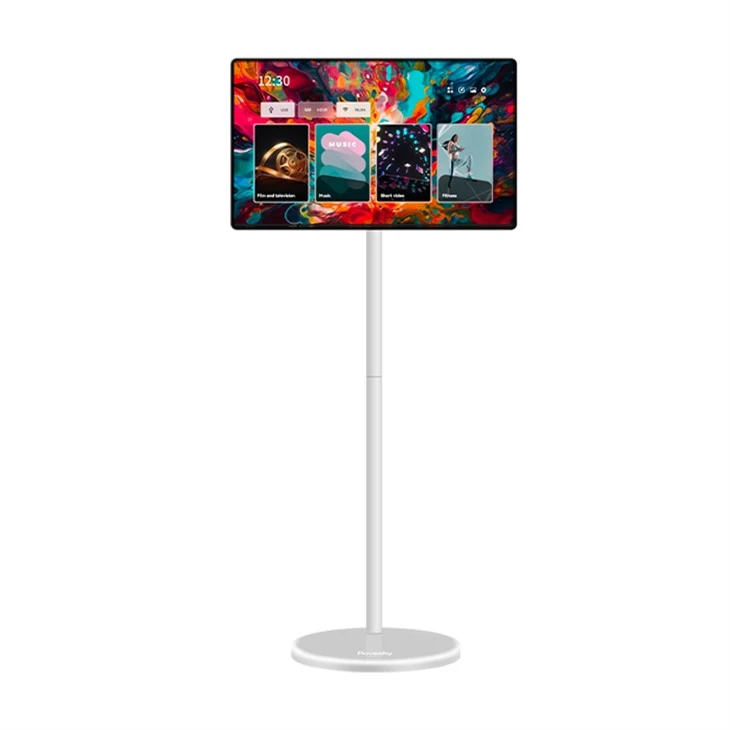
In addition to the technical improvements, we're also providing our customers with tools to manage power consumption. Our screens come with built - in power - saving modes that can automatically adjust the brightness, refresh rate, and other settings based on the ambient light and usage patterns.
When it comes to real - world usage, the power consumption of a smart mobile display screen can vary widely. If you're using the screen in a well - lit environment, you might need to set the brightness higher, which will increase power usage. On the other hand, if you're using it in a dimly lit room, you can lower the brightness and save energy.
Let's take a look at some specific examples. A 23.8 - Inch Stand By Me Smart Portable TV.supplier might consume around 15 - 25 watts when in normal use, depending on the settings. A larger 32 - inch 4K screen could use anywhere from 30 - 50 watts or more, especially if it's set to high brightness and a high refresh rate.
It's also important to note that power consumption can change over time. As the screen ages, the efficiency of the components might decrease, leading to slightly higher power usage. However, with proper maintenance and regular software updates, we can help mitigate these effects.
So, if you're in the market for a smart mobile display screen, it's crucial to consider the power consumption characteristics. Think about your usage patterns, the environment in which you'll be using the screen, and your budget for energy costs.
If you're interested in learning more about our smart mobile display screens or have any questions about power consumption, feel free to reach out. We're always happy to have a chat and help you find the perfect screen for your needs. Whether you're a business looking to outfit your offices with portable monitors or an individual wanting a great screen for your home entertainment, we've got you covered. Let's start a conversation about your requirements and see how we can work together.
References
- Display Industry Reports
- Technical Documentation from Display Component Manufacturers