

What is the latency of a smart board?
Hey there! As a supplier of smart boards, I often get asked about the latency of these amazing devices. So, let's dive right in and talk about what latency is in the context of a smart board and why it matters.
What's Latency Anyway?
Latency is basically the delay between when you do something on a device and when the device actually responds to that action. In the case of a smart board, it's the time between when you touch the board with a pen or your finger and when the corresponding mark or action appears on the screen.
Think about it like this: when you're writing on a regular whiteboard with a marker, the ink shows up right where you put the marker down. There's no delay. But with a smart board, there can be a tiny lag. That lag is what we call latency.
Why Latency Matters
Low latency is super important for a great user experience on a smart board. Here are a few reasons why:
Natural Writing and Drawing
If you're an artist or a teacher who likes to draw diagrams on the board, you want your strokes to look and feel natural. High latency can make your lines look choppy or make it seem like the board is "behind" your hand. With low latency, your writing and drawing will flow smoothly, just like on a real whiteboard.
Interactive Presentations
In a business or educational setting, interactive presentations are all the rage. You might want to click on links, highlight text, or move objects around on the screen. High latency can make these interactions frustrating because you have to wait for the board to catch up. Low latency ensures that your presentations go off without a hitch.
Real - Time Collaboration
Many smart boards are used for remote collaboration. Team members in different locations can interact with the same board simultaneously. If there's high latency, it can disrupt the flow of the collaboration. For example, if one person is trying to draw a shape and there's a delay, others might not be able to see the changes in real - time, leading to confusion.
Factors Affecting Smart Board Latency
There are several factors that can affect the latency of a smart board. Let's take a look at some of the most important ones:
Sensor Technology
The type of sensor technology used in the smart board plays a huge role in latency. There are different types of sensors, such as infrared, electromagnetic, and capacitive. Each has its own characteristics when it comes to latency.
Infrared sensors are common because they're relatively inexpensive. However, they can sometimes have higher latency compared to other technologies. Electromagnetic sensors, on the other hand, are known for their low latency and high accuracy. They're often used in high - end smart boards. Capacitive sensors are similar to the ones used in smartphones and tablets. They offer a good balance between cost and performance in terms of latency.
Processing Power
The processing power of the smart board's internal computer also affects latency. A more powerful processor can handle the data from the sensors more quickly, reducing the delay between the touch and the response on the screen. If the processor is slow, it might take longer to process the information, resulting in higher latency.

Software Optimization
The software running on the smart board is another crucial factor. Well - optimized software can minimize latency by efficiently managing the data flow between the sensors, the processor, and the display. On the other hand, poorly optimized software can introduce unnecessary delays.
Measuring Smart Board Latency
Measuring latency is not as straightforward as you might think. There are different ways to do it, and the results can vary depending on the measurement method.
One common way is to use a high - speed camera to record the touch event and the corresponding response on the screen. By analyzing the video frame by frame, you can calculate the time difference between the touch and the appearance of the mark on the screen.
Another method is to use specialized testing equipment that can measure the electrical signals from the sensors and the time it takes for them to be processed and displayed.
Our Smart Boards and Latency
As a Supplier of smart boards, we understand the importance of low latency. That's why we've invested a lot of time and resources in developing smart boards with the latest sensor technology and powerful processors.
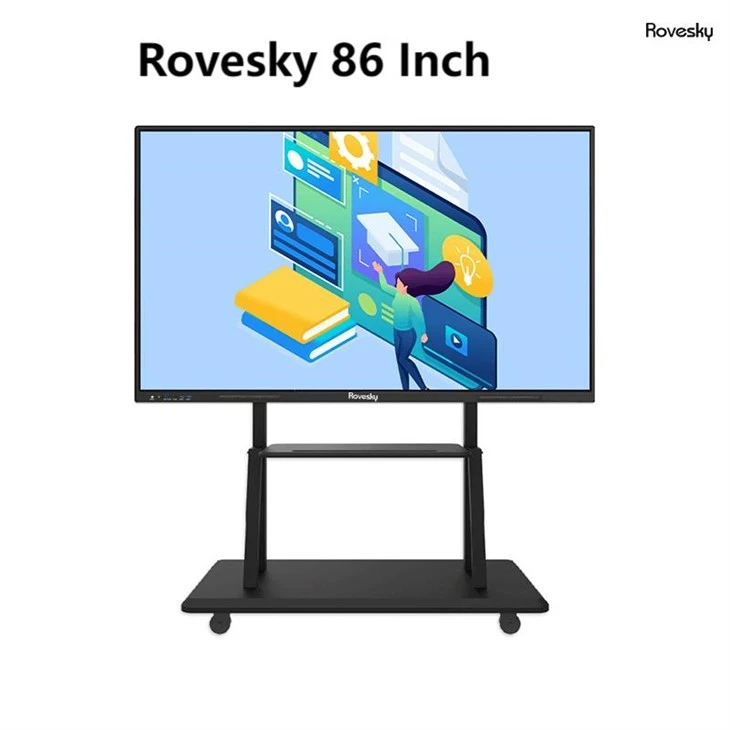
Our 86 - Inch 4K Interactive Smart Whiteboard Supplier boards are designed to have extremely low latency. We use electromagnetic sensors in our high - end models, which offer near - instantaneous response times. The processing power of our boards is also top - notch, ensuring that all the data is processed quickly.
We've also spent a lot of time optimizing the software on our smart boards. Our software engineers have worked hard to minimize any delays in the data flow, so you can enjoy a seamless and responsive experience.
Conclusion
In conclusion, latency is a critical factor when it comes to the performance of a smart board. Low latency ensures a natural, interactive, and collaborative experience. At our company, we're committed to providing smart boards with the lowest possible latency.
If you're in the market for a smart board and want to learn more about our products, or if you have any questions about latency or other features, don't hesitate to reach out. We'd love to have a chat with you and help you find the perfect smart board for your needs. Whether you're a business looking for a great presentation tool or an educational institution in need of an interactive teaching solution, we've got you covered. Let's start a conversation and see how we can work together to enhance your interactive experience!
References
- "The Impact of Latency on Interactive Displays" - Journal of Display Technology
- "Sensor Technologies for Smart Boards: A Comparative Analysis" - Electronics Research Journal