

How many speakers does a regular TV usually have?
When it comes to regular TVs, one of the common questions that consumers often ask is, "How many speakers does a regular TV usually have?" As a supplier of regular TVs, I'm here to shed some light on this topic and provide you with a comprehensive understanding of TV speakers.
General Speaker Configurations in Regular TVs
In the world of regular TVs, the number of speakers can vary significantly based on several factors such as the TV's size, price range, and intended use. Generally, smaller and more budget - friendly TVs tend to have a more basic speaker setup.
Most entry - level and smaller TVs, typically those in the 20 - 32 - inch range, like our Rovesky 23.8 - Inch Stand By Me Smart Portable TV, usually come with two speakers. These speakers are often placed on the bottom or the sides of the TV. The two - speaker setup is a cost - effective way to provide basic audio output. It can deliver a stereo sound experience, where different frequencies are split between the left and right speakers, creating a sense of directionality for the sound. For example, when watching a movie, you can hear dialogue and basic ambient sounds, but the overall audio quality may lack depth and richness.
As we move up to mid - sized TVs, in the 32 - 55 - inch range, manufacturers may start to increase the number of speakers to enhance the audio experience. A common configuration for these TVs is a 2.0 or 2.1 speaker system. A 2.0 system, similar to the basic two - speaker setup, focuses on stereo sound. However, the speakers in a 2.0 system of a mid - sized TV are often of better quality, with larger drivers and more power, resulting in clearer and louder audio.
A 2.1 speaker system, on the other hand, adds a subwoofer to the two - speaker setup. The subwoofer is responsible for handling the low - frequency sounds, such as bass in music, explosions in action movies, or the rumbling of thunder in a nature documentary. This addition significantly improves the overall audio quality, adding more depth and impact to the sound. Our Rovesky 65 - Inch 4K Android Smart TV features a high - end 2.1 speaker system, which can provide a truly immersive audio experience for users.
High - End and Large - Screen TVs
For high - end and large - screen TVs, especially those over 55 inches, manufacturers often go even further in their speaker configurations. Some large - screen TVs may have a 3.1, 5.1, or even 7.1 speaker system.
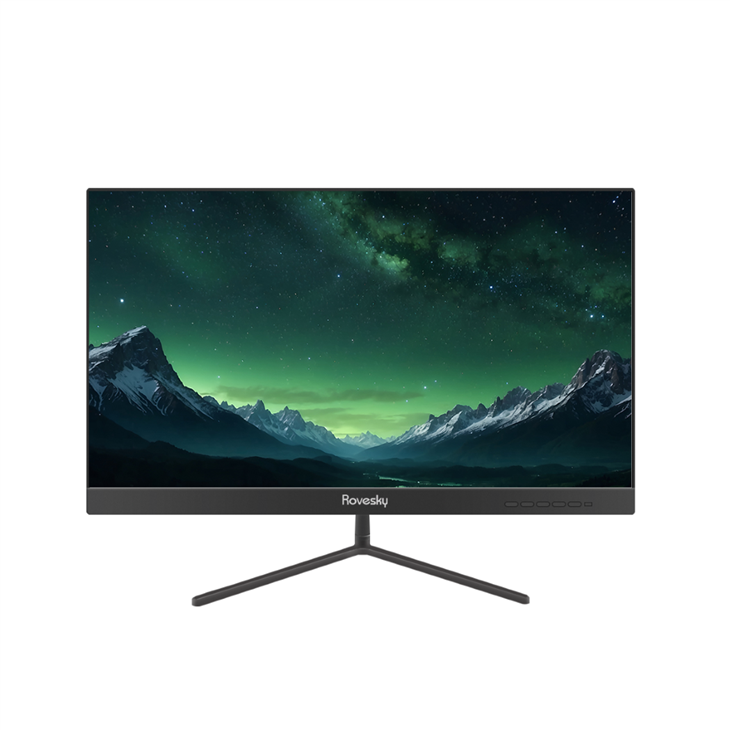

A 3.1 system adds a center speaker to the 2.1 setup. The center speaker is crucial for clear dialogue in movies and TV shows, as it focuses on the mid - frequency range where most human voices fall. This ensures that the dialogue is always clear and easy to understand, even when there is a lot of background noise in the audio.
A 5.1 speaker system consists of three front speakers (left, center, and right), two rear speakers, and a subwoofer. This setup creates a surround sound experience, where the audio seems to come from all around the viewer. It is ideal for watching action movies, playing video games, or listening to multi - channel music. The rear speakers add a sense of depth and immersion, making the viewer feel like they are in the middle of the action.
A 7.1 speaker system takes the surround sound experience to the next level by adding two more side speakers. This provides an even more detailed and realistic audio environment, with sound coming from multiple directions simultaneously.
Factors Affecting Speaker Quantity
Several factors influence the number of speakers a TV has. Firstly, cost is a major consideration. Adding more speakers and a subwoofer increases the manufacturing cost of the TV. Therefore, budget - friendly TVs are more likely to have a basic speaker setup.
Secondly, the size of the TV matters. Larger TVs have more space to accommodate additional speakers and a subwoofer. They also tend to target consumers who are willing to pay more for a high - end audio - visual experience. Smaller TVs, especially portable ones like our Rovesky 21.45 - Inch Full HD LCD Monitor, need to be compact and lightweight, which limits the space available for speakers.
The intended use of the TV also plays a role. TVs designed for gaming or home theater use are more likely to have a complex speaker system to provide an immersive audio experience. In contrast, TVs used mainly for watching news or daytime shows may have a simpler setup.
Our TV Speaker Quality and Advantages
At our company, we understand the importance of audio quality in a TV. Whether it's a basic two - speaker setup in our smaller TVs or a high - end 5.1 or 7.1 system in our large - screen models, we ensure that the speakers are of the highest quality.
We use advanced audio technologies to optimize the performance of our speakers. For example, we implement digital signal processing (DSP) to enhance the clarity and balance of the audio. This technology can adjust the frequency response of the speakers in real - time, ensuring that the audio is always of the best quality, regardless of the content being played.
In addition, our speakers are designed to work seamlessly with the TV's overall audio - visual system. We conduct extensive testing to ensure that the audio and video are perfectly synchronized, providing a truly immersive entertainment experience for our customers.
Contact Us for Purchase and Negotiation
If you are interested in purchasing our regular TVs, we invite you to contact us for further negotiation. We offer a wide range of TVs with different speaker configurations to meet your specific needs and budget. Whether you are looking for a basic TV for your bedroom or a high - end home theater system for your living room, we have the perfect solution for you.
References
- "TV Audio Technology: A Comprehensive Guide" - Audio Technology Journal
- "The Impact of Speaker Configuration on TV Viewing Experience" - Consumer Electronics Research Institute