

How does a smart mobile display screen handle video streaming?
In today's digital age, video streaming has become an integral part of our daily lives. From binge - watching our favorite TV shows to attending virtual meetings, we rely on our smart mobile display screens to deliver high - quality video content. As a supplier of smart mobile display screens, I am often asked about how these devices handle video streaming. In this blog post, I'll dive into the technical aspects of how a smart mobile display screen manages video streaming, and also introduce some of our outstanding products.
1. Video Decoding
The first step in handling video streaming on a smart mobile display screen is video decoding. Video files are usually compressed to reduce their size for efficient streaming over the internet. Common video codecs include H.264, H.265 (HEVC), and VP9.
When a video stream is received by the smart mobile display screen, the built - in decoder chip gets to work. This chip is designed to decompress the compressed video data according to the specific codec used. For example, if the video is encoded in H.264, the decoder will reverse the compression process to extract the original video frames.
Modern smart mobile display screens are equipped with powerful decoder chips that can handle high - definition (HD), full - HD, and even 4K video decoding. Our 32inch, 4k, Portable Smart Monitor, Touch Screen is a prime example. It comes with a state - of - the - art decoder that can effortlessly decode 4K video streams, providing users with a crystal - clear and immersive viewing experience.
2. Buffering
Buffering is a crucial process in video streaming. Since the internet connection can be unstable at times, buffering ensures a smooth video - watching experience. When a user starts streaming a video, the smart mobile display screen begins to download a small portion of the video data and stores it in a buffer.
The buffer acts as a temporary storage space. As the video plays, the data is read from the buffer. If the internet connection slows down or experiences a brief interruption, the video can continue to play from the data stored in the buffer until the connection stabilizes and more data can be downloaded.
The size of the buffer in a smart mobile display screen can vary. Larger buffers are beneficial as they can store more video data, reducing the likelihood of buffering interruptions. Our smart mobile display screens are designed with large - capacity buffers to ensure seamless video streaming, even in areas with less - than - ideal internet conditions.
3. Resolution and Aspect Ratio
The resolution and aspect ratio of a smart mobile display screen play a significant role in how video streaming is handled. Resolution refers to the number of pixels on the screen, usually expressed as width x height (e.g., 1920x1080 for full - HD). Higher resolutions can display more detailed and sharper images.
When streaming a video, the smart mobile display screen needs to adjust the video to fit its native resolution. If the video resolution is lower than the screen resolution, the screen will upscale the video to fill the entire screen. Conversely, if the video resolution is higher than the screen can handle, the screen will downscale the video.
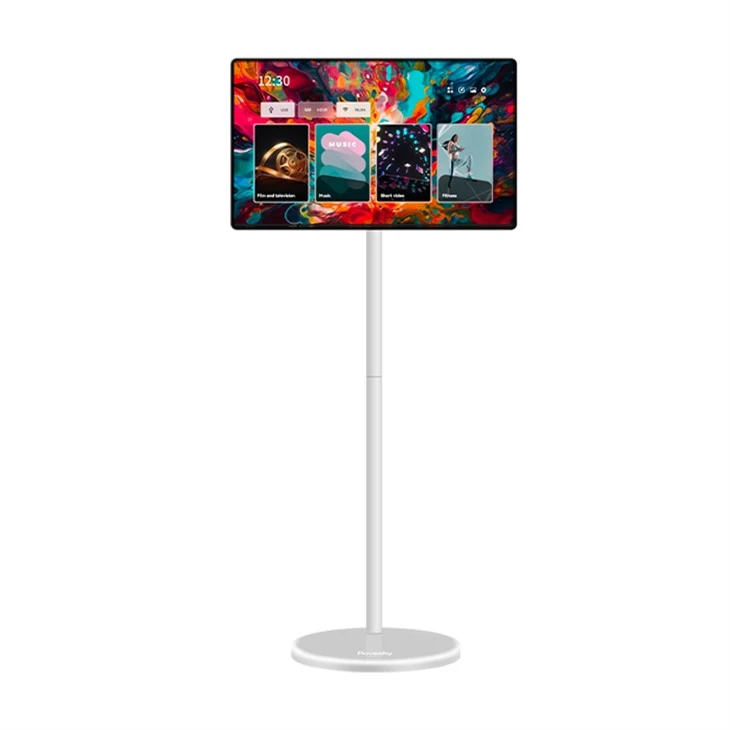
Aspect ratio is the proportional relationship between the width and height of the screen. Common aspect ratios include 16:9, 21:9, etc. The smart mobile display screen must also ensure that the video's aspect ratio is maintained. Otherwise, the video may appear stretched or distorted. Our 23.8 - Inch Stand By Me Smart Portable TV.supplier has a carefully calibrated display that can accurately adjust the video's resolution and aspect ratio, providing a visually appealing viewing experience.

4. Color Accuracy and Contrast
Color accuracy and contrast are important factors for an engaging video - streaming experience. Color accuracy refers to how closely the colors on the screen match the original colors of the video. A display with high color accuracy can reproduce vivid and true - to - life colors.
Contrast is the difference between the brightest and darkest parts of an image. A high - contrast display can show more details in both bright and dark areas of the video. Smart mobile display screens use advanced color calibration technologies and backlight control systems to enhance color accuracy and contrast.
Our display screens are equipped with advanced color management systems. They can accurately reproduce a wide range of colors, from deep blacks to vibrant reds and blues. This ensures that the video content looks as good as it was intended, whether it's a nature documentary with rich greens and blues or a movie with dramatic lighting effects.
5. Refresh Rate
The refresh rate of a smart mobile display screen is the number of times the screen updates the image per second, measured in Hertz (Hz). A higher refresh rate can provide a smoother and more fluid video - watching experience, especially for fast - moving content such as sports or action movies.
Most standard smart mobile display screens have a refresh rate of 60Hz, which is sufficient for normal video streaming. However, some of our high - end models, like the 27 - Inch Stand By Me Smart Portable TV. Wholesale, offer a higher refresh rate of 120Hz or even 240Hz. This means that the screen can display up to 240 frames per second, reducing motion blur and providing a more immersive viewing experience.
6. Connectivity
For video streaming, connectivity is essential. Smart mobile display screens support various connectivity options, including Wi - Fi, Bluetooth, and HDMI.
Wi - Fi is the most common way to stream videos from online platforms. The smart mobile display screen connects to a Wi - Fi network, allowing users to access video - streaming services such as Netflix, YouTube, and Amazon Prime Video. Bluetooth can be used to connect external audio devices, such as speakers or headphones, for a better audio experience.
HDMI is useful for connecting other devices, such as laptops, gaming consoles, or set - top boxes. This allows users to stream videos from these devices directly to the smart mobile display screen. Our display screens are designed with multiple connectivity options, ensuring that users can stream videos from a variety of sources.
Conclusion
As a supplier of smart mobile display screens, we understand the importance of providing high - quality products that can handle video streaming effectively. From video decoding and buffering to resolution adjustment and connectivity, every aspect of our display screens is carefully designed to ensure a seamless and immersive video - streaming experience.
If you are interested in our smart mobile display screens and would like to discuss procurement, please feel free to reach out. We are always ready to provide you with detailed product information and competitive pricing. We look forward to the opportunity to work with you and meet your smart mobile display screen needs.
References
- Digital Video and HD: Algorithms and Interfaces by Charles Poynton
- High - Performance Video Streaming: Architectures, Protocols, and Applications by Ahmed Helmy